
About Cochlear Implants
Expand Patient Care with Advanced Bionics Cochlear Implants
Treating hearing loss today is more than clinical care—it’s a long-term investment in your patients’ quality of life. As a hearing healthcare provider, you’re on the front lines of that journey. For patients who continue to struggle despite well-fit hearing aids, offering advanced solutions like cochlear implants not only improves outcomes, but also sets your practice apart in a competitive landscape.

About Advanced Bionics
Advanced Bionics is the only U.S.-based cochlear implant manufacturer, backed by over 30 years of innovation in hearing technology. Our systems are engineered for performance, with proven benefits in speech understanding, noise management, and long-term reliability.
AB cochlear implants are now approved for a broader range of candidates including older adults and those with residual hearing¹. We provide tools to help you assess candidacy, refer with confidence, and support your patients every step of the way.
How do you know when hearing aids are not enough?
Do you have patients who wear well-fit hearing aids but still struggle with speech understanding? Perhaps they’ve stopped coming in—or you see them more often with ongoing complaints.
If you’ve exhausted traditional amplification options and want to offer a meaningful next step, it may be time to explore cochlear implants.
Discussing cochlear implants doesn’t mean your patients will receive one immediately—it means they’ll be informed. Awareness of advanced options empowers patients to make timely, confident decisions about their hearing health.
When to refer your clients for a cochlear implant evaluation
If your client meets one or both of the criteria below, consider them for a full cochlear implant candidacy evaluation.*
Pure Tone Average
(0.5, 1, 2 kHz)
greater or equal to
60 dB1
in the better ear
Speech
Understanding
less than or equal to
60%1
in the better ear
Advanced Bionics is here to support you with:
- Educational resources for professionals
- Referral tools and candidacy guidance
- Innovative technology designed around patient needs
- Digital tools for remote programming and rehab
Let’s work together to help your patients hear their best—today and into the future.
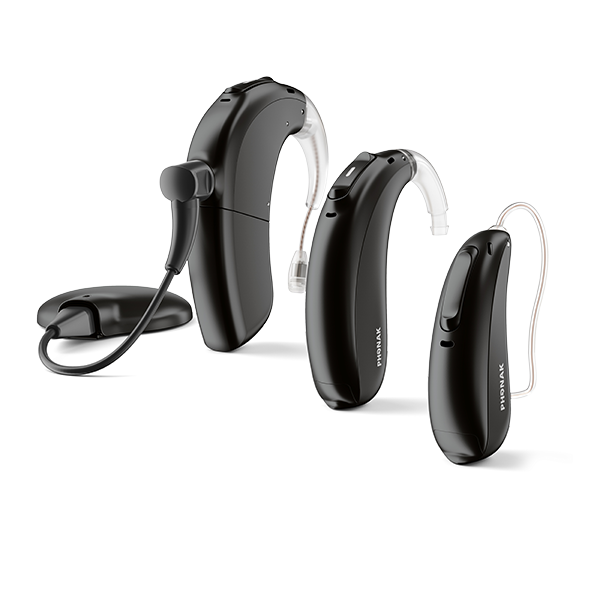
What are cochlear implants and how do they work?
Hearing relies on coordination between the ears and the brain. In sensorineural hearing loss, damaged cochlear hair cells disrupt sound transmission to the auditory nerve. Hearing aids may amplify sound but often fail to improve speech clarity. When that happens, cochlear implants are the next step in the treatment continuum.
AB cochlear implants bypass these damaged cells, directly stimulating the auditory nerve to restore sound perception and speech understanding. The system includes:
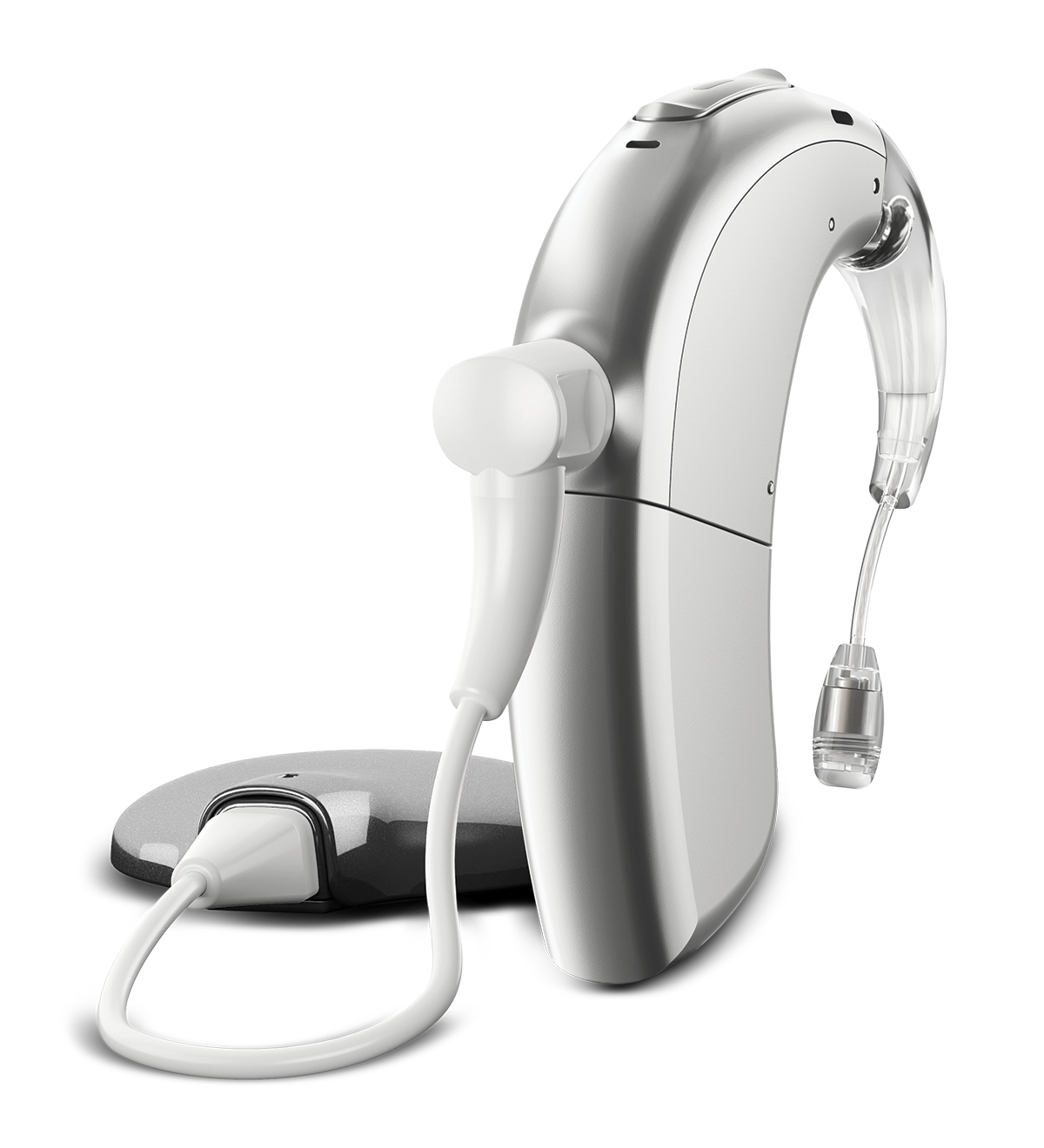
External Sound Processor
Captures and processes environmental sound
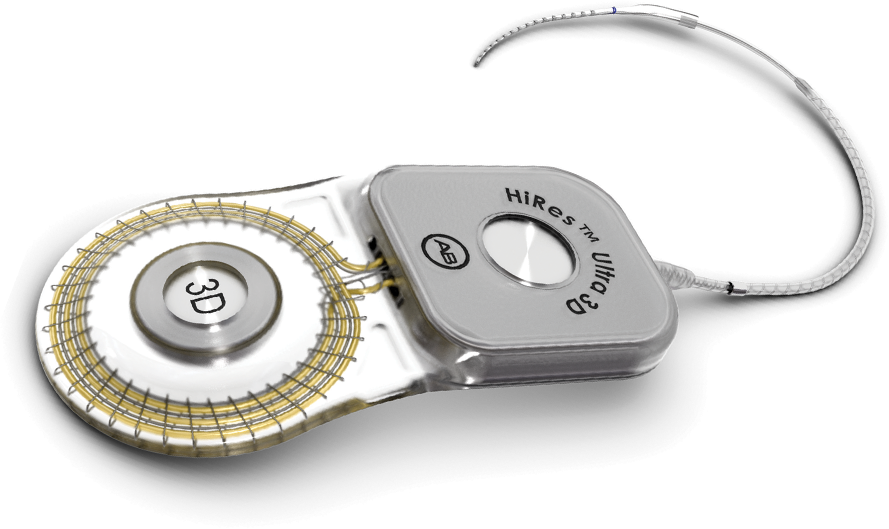
Internal Electrode Array
Surgically implanted to deliver electrical signals to the auditory nerve
Parts of an implant
A cochlear implant system restores hearing by sending sound signals directly to the hearing nerve.
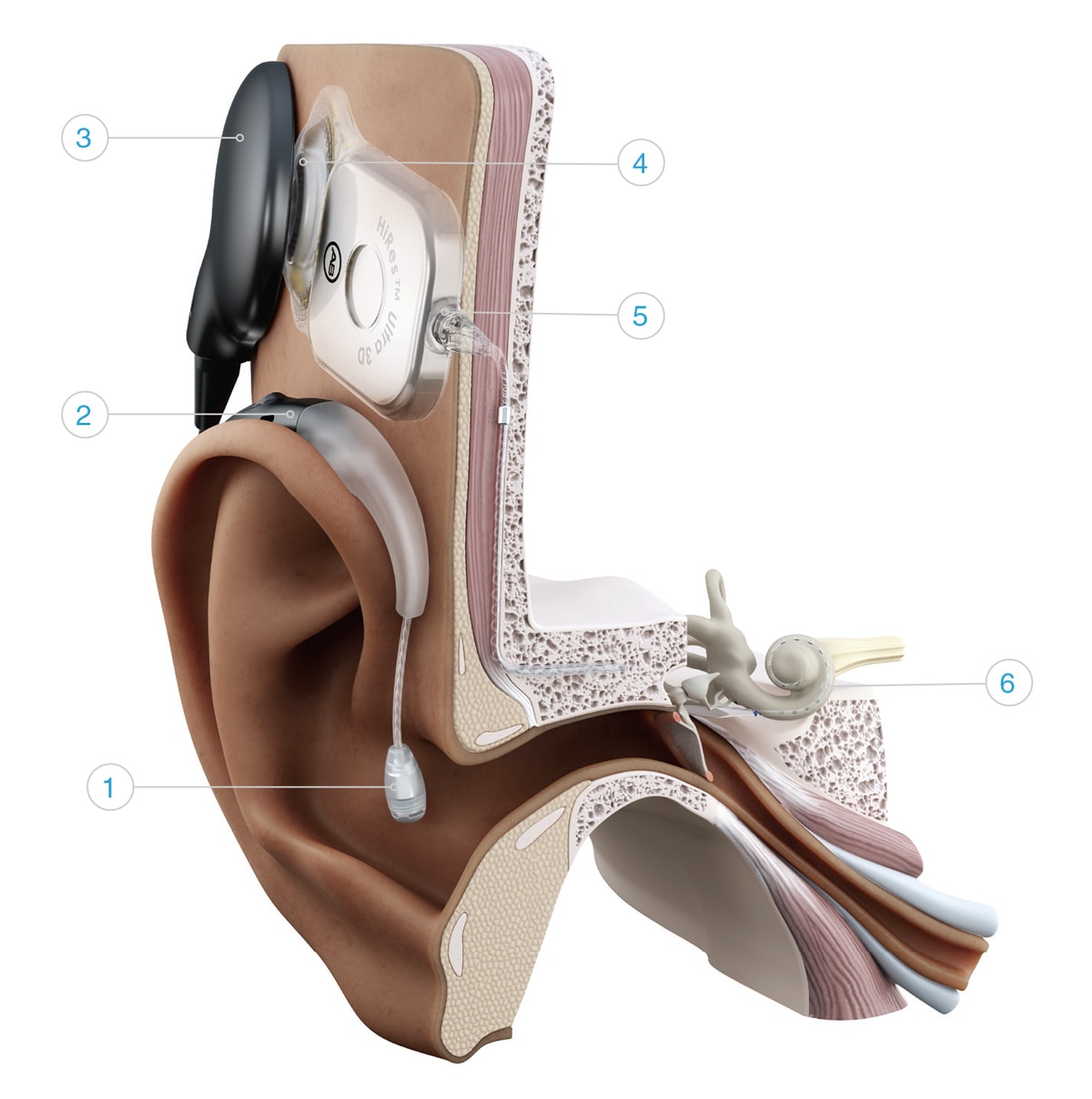
① Microphone
Our cochlear implant system captures sound with one or more microphones, helping you hear the full range of sound. Even as low as a whisper!
② Sound Processor
With the only CI strategy recognized by the FDA to improve hearing in noise,1 our sound processors filter sound signals to make hearing easier.
③ Headpiece
The headpiece sends the sound signal from the sound processor to the implant underneath the skin. It is designed to be lightweight and comfortable.
④ Magnet
Our multi-magnet assembly connects the headpiece to the implant. If you need an MRI in the future, no worries, our HiRes Ultra 3D magnet assembly makes MRIs hassle free!
⑤ Implant
While new sound processors are routinely released, the implant is made to stay. With the most performance focused implant on the market, you can rest at ease knowing our implant is ready for the future.
⑥ Electrode Array
Designed to be placed in the inner ear,2 our electrode array sends filtered sound signals to help you understand speech and enjoy music.3
How do they help my patients?
Outcomes today with AB’s cochlear implants are better than ever, and more patients are eligible to benefit. What was once a last resort is now a proactive, evidence-based treatment for severe-to-profound hearing loss.
For you, this means that referring patients for cochlear implant evaluation has never been more clinically justified. Procedures are safer, outcomes are more predictable, and the technology of Advanced Bionic’s CI system is increasingly adaptable to diverse patient needs. Whether transitioning from hearing aids or exploring cochlear implants for the first time, today’s solutions empower patients to reconnect with the moments that matter most.
Key benefits include:
- Enhanced speech understanding—even in challenging listening environments
- Safe, reliable procedures with expanding candidacy criteria
- Future-ready technology designed for long-term performance
Possible Improvements in Speech Understanding After Getting a Cochlear Implant

90%
After Cochlear Implant
speech scores: 90% HINT (speech test) in Quiet'
68%
HINT in Noise
50%
Before Cochlear Implant
speech scores: ≤ 50% HINT (speech test) in Quiet

Other Possible Improvements After Getting a Cochlear Implant6-9

Quality of Life

Self-Esteem

Daily Activity

Employment

Social Engagement
Seamless Bluetooth® connectivity for phones, TVs, and more

Bluetooth® is a registered trademark owned by the Bluetooth SIG, Inc., and any use of such marks by Sonova AG is under license.


Cochlear implants help patients stay engaged—at home, at work, and in life.
“I’m able to hear and experience life with my wife and kids, and it’s all worth it!”
David B. Cluff
20-year cochlear implant recipient, father, husband, photographer, and blogger.
Ready to Take the Next Step?
Whether you're referring your first patient or expanding your CI services, we’re here to help. Connect with your regional AB support team to learn more.
Let’s work together to help your patients hear their best—today and into the future.
-
Zeitler DM, Prentiss SM, Sydlowski SA, Dunn CC. American Cochlear Implant Alliance Task Force: Recommendations for Determining Cochlear Implant Candidacy in Adults. Laryngoscope. 2024 Feb;134 Suppl 3(Suppl 3):S1-S14. doi: 10.1002/lary.30879. Epub 2023 Jul 12. PMID: 37435829; PMCID: PMC10914083.
-
Zwolan, Teresa A.; Schvartz-Leyzac, Kara C.; Pleasant, Terrence. Development of a 60/60 Guideline for Referring Adults for a Traditional Cochlear Implant Candidacy Evaluation. Otology & Neurotology 41(7):p 895-900, August 2020. | DOI: 10.1097/MAO.0000000000002664
-
Koch DB, Osberger MJ, Segel P, Kessler DK. (2004) HiResolution and conventional sound processing in the HiResolution Bionic Ear: using appropriate outcome measures to assess speech-recognition ability. Audiology and Neurotology, 9:214-223.
-
Lenarz T, Prenzler N, Salcher R, Andreas Buechner A. (2017) First experience with a new thin lateral electrode array. American Cochlear Implant Alliance, San Francisco, July 26–29, 2017.
-
Osberger MJ, Quick A, Arnold L, Boyle P. (2010) Music benefi ts with HiRes Fidelity 120 sound processing. Cochlear Implants International 11(S1): 351-354.
-
Hornsby, B., Huang, H., Sohail, H., Gifford, R., Ricketts, T.A. & Picou, E.M. (2023, March). Effort and fatigue while listening: sustained speech-processing with cochlear implants. Poster presented at the American Auditory Society Annual Meeting, Scottsdale, AZ.
-
Buechner, A., Bardt, M., Kliesch, S., & Brendel, M. (2022, May). Influence of Automatic Scene Classification Systems in Hearing Devices on Speech Perception in Real-life Situations. Poster presented at the American Cochlear Implant Alliance Annual Meeting, Washington, DC.
-
Dorman, M.F., Cook Natale, S., & Agrawal, S. (2018). The Value of Unilateral CIs, CI-CROS and Bilateral CIs, with and without Beamformer Microphones, for Speech Understanding in a Simulation of a Restaurant Environment. Audiology & neuro-otology, 23(5), 270–276. https://doi.org/10.1159/000493844
-
Dwyer RT, Kessler D, Butera IM, Gifford RH. Contralateral Routing of Signal Yields Significant Speech in Noise Benefit for Unilateral Cochlear Implant Recipients. J Am Acad Audiol. 2019 Mar;30(3):235-242. doi: 10.3766/jaaa.17117. Epub 2018 Jan 30. PMID: 30461413; PMCID: PMC6542640.


Learn
Explore
Connect
About AB
Contact Us
