
One Ear Is Working.
Why is Hearing Still This Hard?
You arrive at a meeting early so you can choose a seat where your good ear faces the room. Someone speaks from your deaf side anyway. You catch fragments and fill in the rest. Later, you realise you missed something important. That constant adjustment can be exhausting.
For people living with single-sided deafness, a form of hearing loss affecting one ear, a cochlear implant may be one option worth exploring.

What Is a Cochlear Implant and Can It Work for Single-Sided Deafness?
Cochlear implants are often associated with deafness in both ears. They are also an established treatment option for some people with single-sided deafness, where one ear has little or no usable hearing. Cochlear implants have been used worldwide for decades and are supported by extensive clinical experience.
A cochlear implant does not amplify sound. Instead, it:
- Captures sound from the deaf side
- Converts it into digital signals
- Sends those signals directly to the hearing nerve
This allows the brain to receive sound input from both sides. With consistent use and guided rehabilitation, many recipients report meaningful improvement in sound direction awareness and listening in noisy environments.
Some people are born with it. Others experience sudden hearing loss in one ear due to illness, injury, or medical causes. The cause may differ. The daily impact is often similar.
Treatment Options for Single-Sided Deafness
A hearing test is the first step in determining which treatment may be suitable. In Australia, treatment options for single-sided deafness may include hearing devices or surgical solutions, depending on your hearing profile. A hearing care professional will determine which option may be appropriate.
| CROS System | Cochlear Implant | |
|---|---|---|
| How it works | Sends sound to the hearing ear | Sends sound directly to the deaf ear’s hearing nerve |
| Brain receives input | One side only | Both sides |
| Best suited for | Certain levels of SSD | Severe to profound hearing loss in one ear |
CROS System
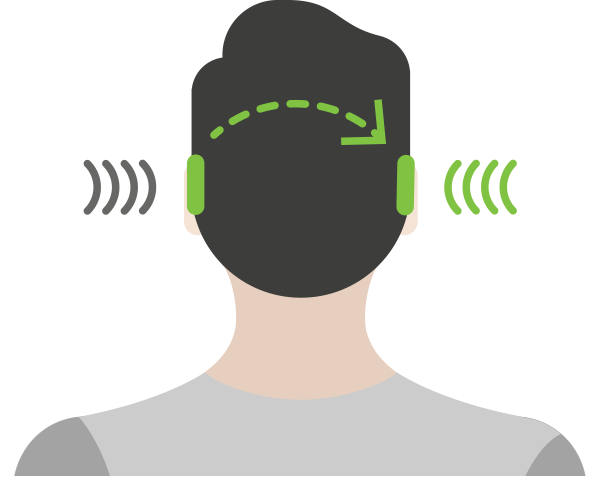
CROS stands for Contralateral Routing of Signal. It is a hearing device that picks up sound from your deaf side and wirelessly sends it to a device on your hearing ear. This allows you to hear sounds from your deaf side, but all sounds are still processed by your hearing ear.
Cochlear Implant System
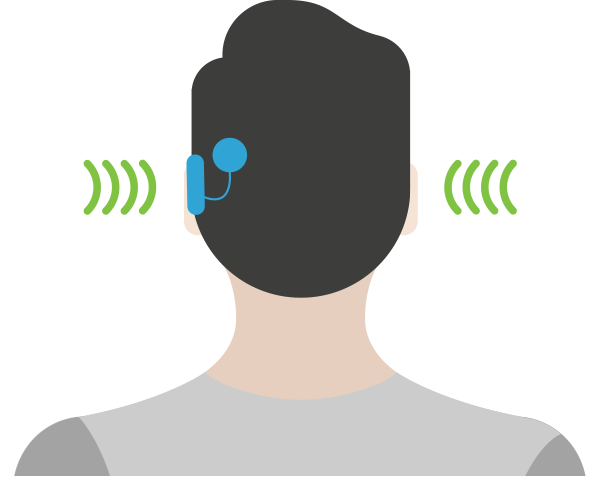
A cochlear implant system has two parts. A small implant is placed under the skin during surgery. A sound processor sits behind the ear and is worn daily. Together, they capture sound and send signals directly to the hearing nerve, bypassing the parts of the ear that are no longer working.
Funding for Single-Sided Deafness in Australia
Cochlear implants may be covered or partially funded through Medicare, public hospital programs, Department of Veterans' Affairs (DVA), or private health insurance, depending on eligibility and policy level.
Your clinic can guide you through funding options before any decisions are made.

Yes. Cochlear implants are an established treatment option for adults with single-sided deafness, where hearing in the deaf ear is severe to profound. Your hearing care professional is best placed to tell you whether a cochlear implant may help in your specific situation.
It is worth understanding that better hearing through a cochlear implant is a process, not a quick fix. How quickly you adapt depends on the technology used, the condition of your hearing nerve, and the consistency of your rehabilitation.
Cochlear implants work differently from natural hearing. Rather than amplifying sound, a cochlear implant sends small electrical signals directly to the hearing nerve, which the brain then interprets as sound.
For many cochlear implant users, this means being able to follow conversations, use the phone, and engage more comfortably in everyday listening situations. Individual results vary and consistent device use and rehabilitation are important factors in outcomes.
It is natural to have questions about surgery. Compared to many other surgeries, cochlear implant surgery is simple and minimally invasive. The procedure typically takes two to four hours under general anaesthesia.
Your surgeon and clinical team will walk you through what to expect before, during, and after surgery so you can make a fully informed decision.
When you only have one good ear, you are 100% reliant on it for your hearing, communication, and connection to the world. It is possible that your hearing in your good ear could change in the future, leading to much more difficulty working or communicating with friends and family.
Relying on one ear only is like going through life with no safety net. Exploring your options can give you peace of mind for the future.
Click the button below to complete a form. An Advanced Bionics representative will be in touch to help guide your next steps, including a referral to a qualified audiologist who can assess whether a cochlear implant may be an appropriate option for you.
Learn
Explore
Connect
About AB
Contact Us


