
Two Different Ways to Treat Hearing Loss
Cochlear Implant vs Hearing Aids
Cochlear Implant vs Hearing Aids
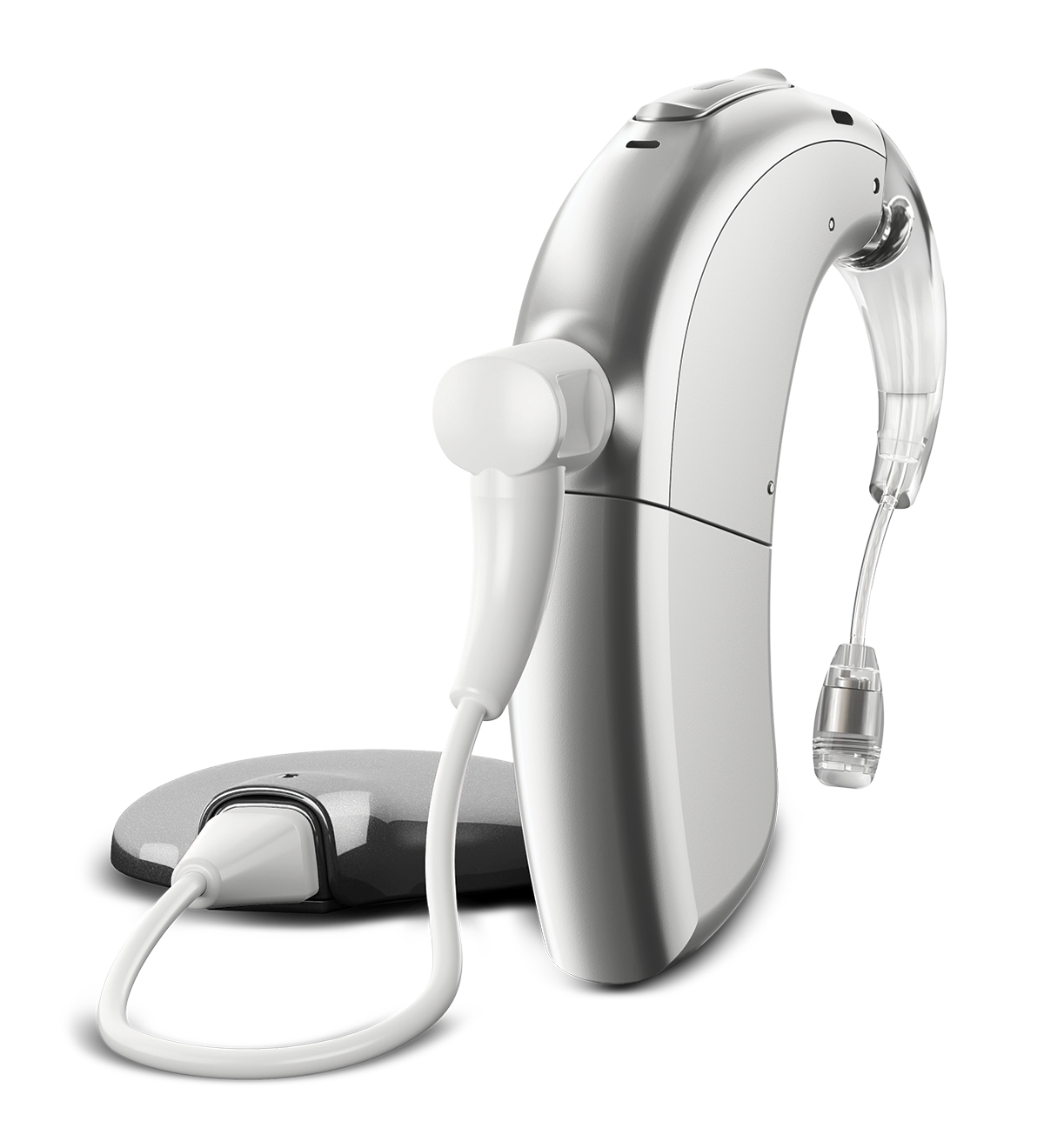
Cochlear Implants
Cochlear implants bypass the damaged part of your ear and send sound signals straight to your hearing nerve. For people with severe to profound hearing loss, this can mean the difference between hearing noise and understanding speech.
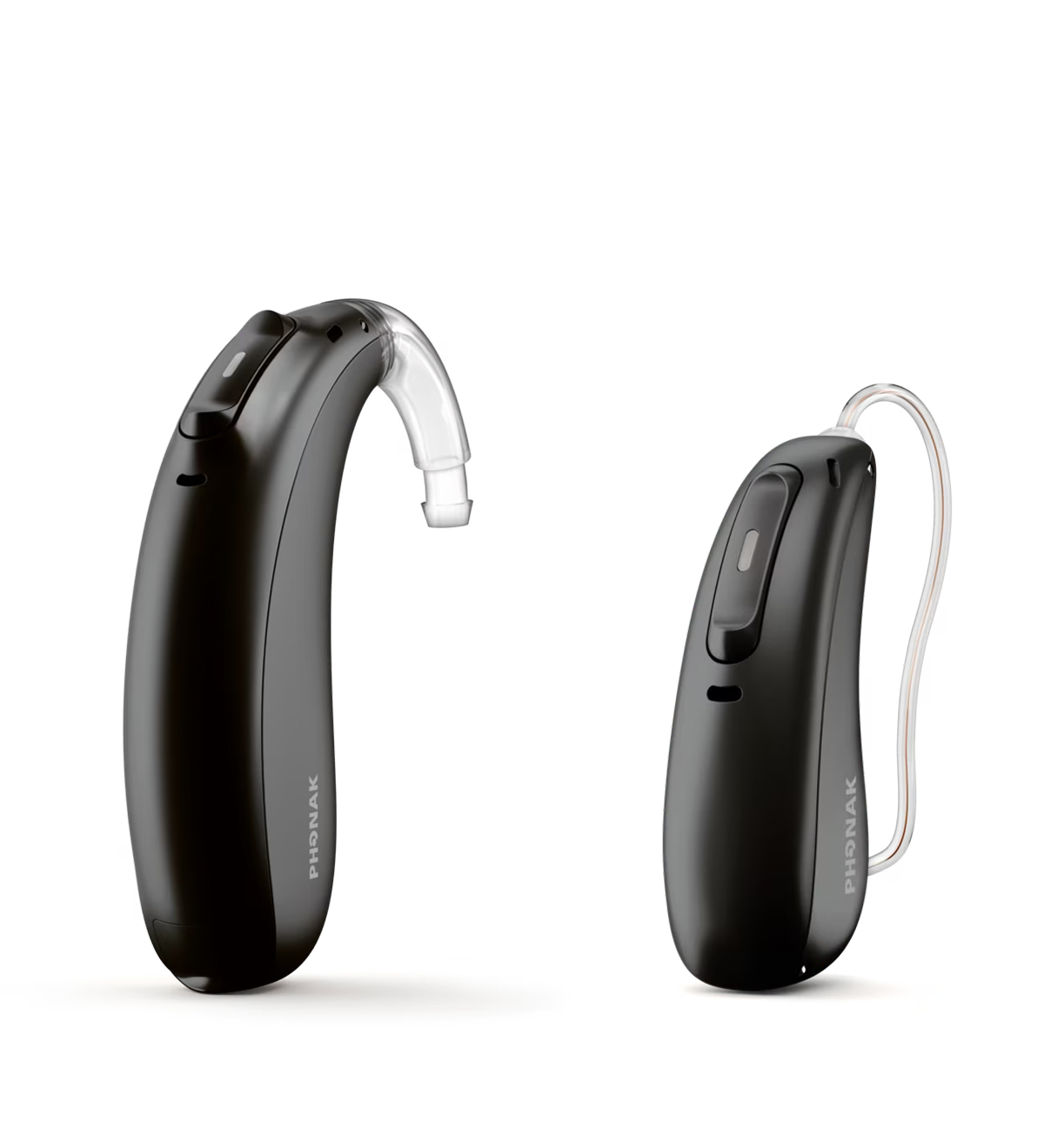
Hearing Aids
Hearing aids make sounds louder so your ears can pick them up. They work well for many people, but as hearing loss gets worse, louder doesn't always mean clearer.
How Does a Cochlear Implant Work?
How Does a Cochlear Implant Work?
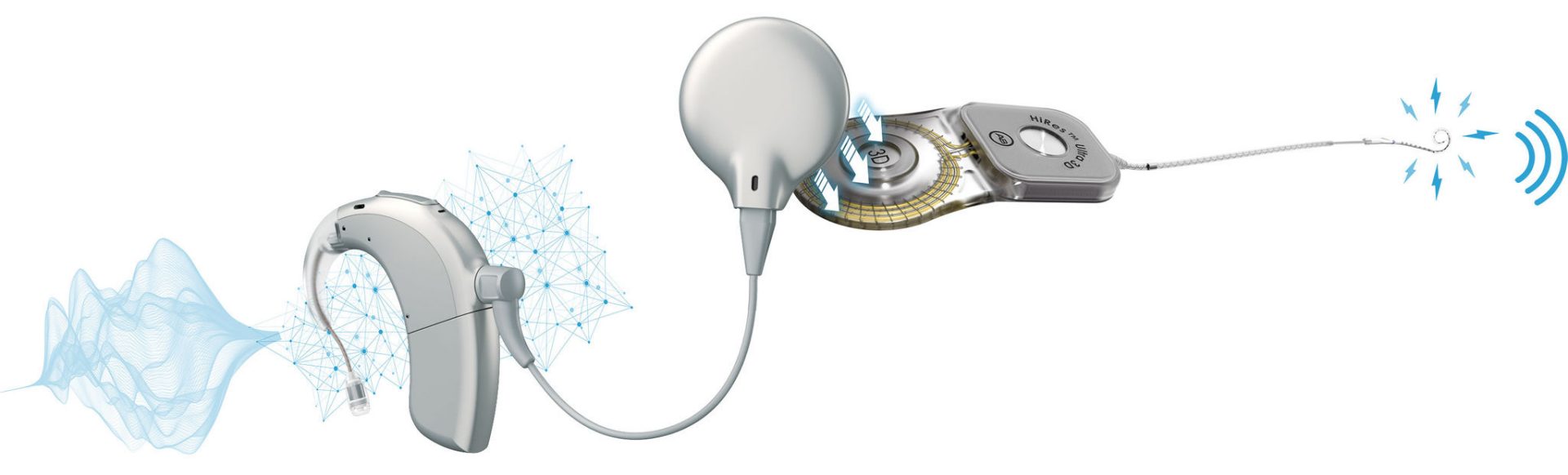
A cochlear implant has two parts that work together. The sound processor is the part you wear on your ear, similar in size to a hearing aid. It picks up the sounds around you and sends them to the implant. The implant sits just under the skin and connects to your hearing nerve.
| Cochlear Implants | Hearing Aids | |
| How It Works | Bypasses the damaged part of your ears and sends sound signals directly to the hearing nerve | Makes sounds louder so your ears can pick them up more easily |
Best For | People with severe to profound hearing loss who struggle to understand speech and enjoy music, even with hearing aids | People with mild to moderate hearing loss who still get some benefit from louder sound |
| The result | Speech is clearer and easier to follow, even in noise, and music is more enjoyable | Sounds are louder, but may still be unclear, especially in noisy places |
| How you get one | A simple evaluation to see if you're a candidate, followed by a short outpatient surgery and activation a few weeks later | Hearing care professionals can fit them to your hearing loss in a series of appointments |
| Device life | The implant is designed to last decades, and the sound processor can be upgraded over time | Typically replaced every 3 to 7 years as technology improves |
| Insurance coverage | Often covered by public and/or private insurance | Coverage vary |
Is a Cochlear Implant Right for You?
Is a Cochlear Implant Right for You?
If your world has been getting quieter despite wearing hearing aids, you may recognize some of these signs.
• Conversations in noisy places are tiring, even with your hearing aids turned up
• You ask people to repeat themselves more often than you used to
• Phone calls have become difficult, and you avoid them when you can
• You skip activities you used to enjoy because keeping up with conversation feels too hard
If any of this sounds familiar, a cochlear implant may help you hear well again. The first step is a cochlear implant evaluation to find out if you're a candidate.
Do You Have to Choose Between
a Cochlear Implant and a Hearing Aid?
Do You Have to Choose Between
a Cochlear Implant and a Hearing Aid?
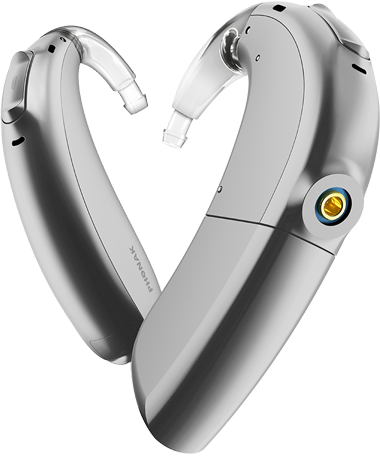
No. Many people use both: a cochlear implant on one ear and a hearing aid on the other. Using both ears together helps you locate where sounds are coming from and follow conversations more naturally.
While cochlear implants work alongside any hearing aid, Advanced Bionics cochlear implants and Phonak hearing aids are built on the same platform, so they communicate automatically and adjust together as your listening environment changes.

I am so glad I chose Advanced Bionics for its technology. AB has given me a world of hearing that I never knew existed, and it has never left me behind as its technology improved, as hearing aids did so long ago. "
Melinda Hayden
Retiree and AB CI Mentor
Still Have Questions About Cochlear Implants vs Hearing Aids?
Still Have Questions About Cochlear Implants vs Hearing Aids?
Cochlear implants tend to give better results when hearing loss has progressed beyond what hearing aids can help with. If you're struggling to hear with your hearing aids, it may be worth finding out whether a cochlear implant could help.
A hearing care professional will test your hearing and speech with and without your hearing aids. They'll also ask about your everyday hearing experiences, like how you manage phone calls and conversations in noisy places. You'll leave with a clear picture of your options.
Yes. It's a routine outpatient procedure that typically takes two to four hours, and most people go home the same day. You'll be under general anesthesia during the surgery. Recovery time is usually short.
Your hearing will improve gradually over the first few months as your brain adapts to the new signals. Many people find that speech becomes easier to follow with each follow-up appointment as their sound processor is fine-tuned.
There is no upper age limit. Older adults routinely receive cochlear implants and experience significant improvements in hearing and quality of life.
Start with a cochlear implant evaluation. They'll test your hearing to see whether a cochlear implant could help. There's no commitment involved.
Ready to Take the Next Step?
Ready to Take the Next Step?
A cochlear implant evaluation is a simple appointment with a hearing care professional. You'll find out whether a cochlear implant could help you hear better than your current hearing aids.
Photos are for illustrative purposes only and do not show real cochlear implant recipients. The views expressed in the testimonials are those of the author. Each person's situation is unique, so your experience may not be the same. Talk to your hearing care provider about whether a cochlear implant is right for you.


Learn
Explore
Connect
About AB
Contact Us
